At SA Accountancy, this is one of the most common mix-ups we see: an audit is not a separate thing from assurance — it's the most rigorous type of assurance engagement that exists. Assurance is the broader category — any engagement where an independent accountant evaluates your financial information and reports a level of confidence in it. An audit sits at the top of that category, not beside it.
The three levels of assurance, ranked
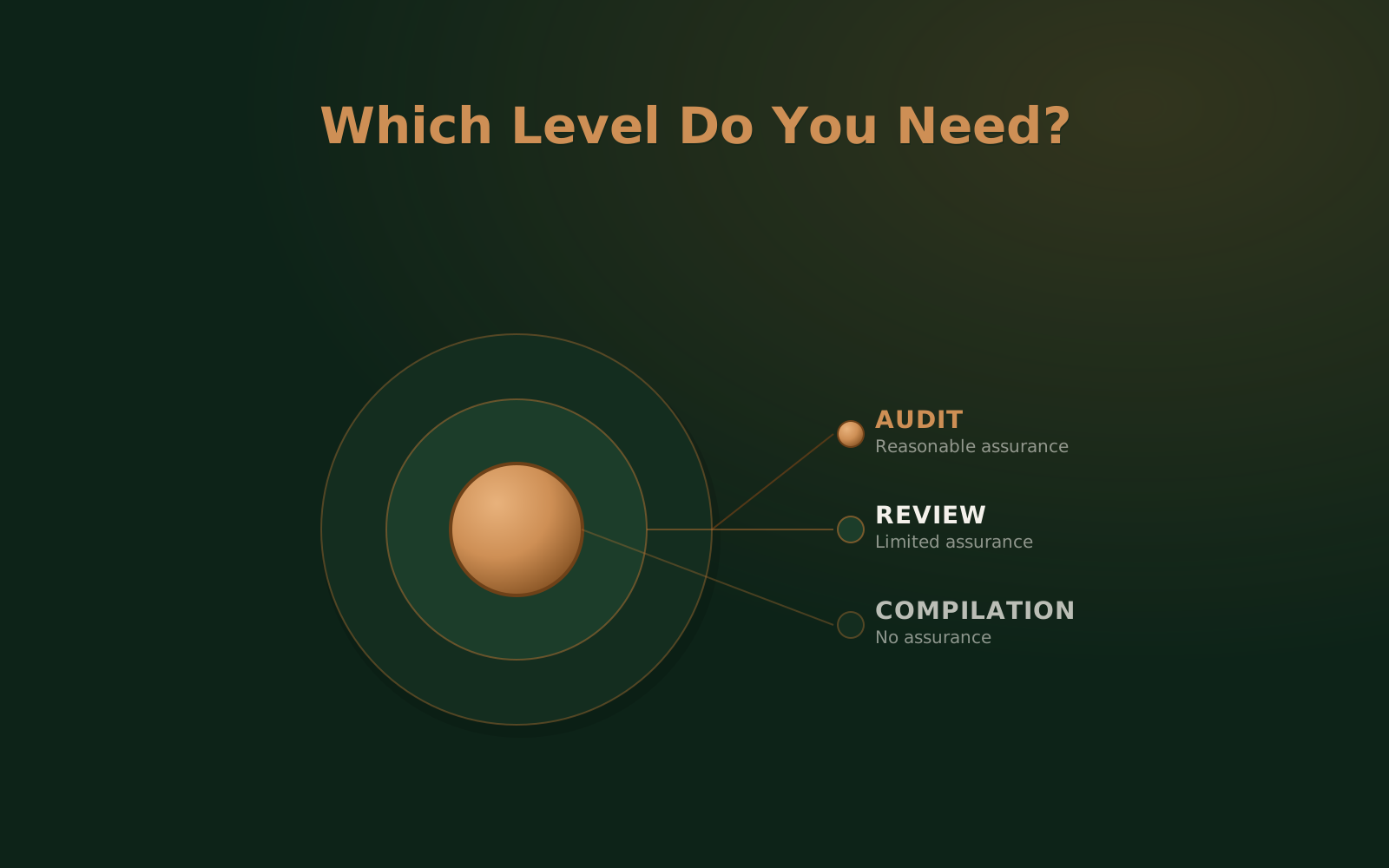
Assurance isn't all-or-nothing. It comes in three distinct levels, and most people asking for "an audit" haven't actually confirmed which one they need.
- Audit — reasonable assurance. The highest level available. Detailed testing of transactions, balances, and internal controls, resulting in a formal opinion on whether the financial statements are free from material misstatement.
- Review — limited assurance. Mostly analytical procedures and management inquiry, not detailed transaction testing. Faster and less invasive, with a correspondingly lower level of assurance in the final report.
- Compilation — no assurance. The accountant organises and presents your financial data in a standard format, but expresses no opinion on it at all. It's a presentation exercise, not an assurance engagement.
Why the confusion happens
All three produce a report with an accountant's name on it, which is exactly why they get treated as interchangeable. But the reader of that report — a bank, an investor, a regulator — is relying on very different things depending on which one you commissioned. A lender who actually needs audit-level assurance won't be satisfied by a compilation, no matter how professional it looks.
How to know which one you actually need
- A regulator or loan covenant specifies the exact requirement → that's the one you need, full stop
- A lender or investor asks for "assurance" without specifying → ask them directly which level satisfies their requirement before you commission the most expensive option by default
- You want an internal sanity check on your own numbers → a compilation is often enough
- You're a large, complex, or soon-to-be-public entity → a full audit is almost always required regardless of what anyone asks for
The cost difference is real, in both directions
Audits take the most fieldwork — testing transactions and evaluating controls — so they cost the most. Reviews are faster and cheaper. Compilations are fastest and cheapest of all, since no assurance opinion is being formed. Getting the level wrong is expensive either way: paying for full audit rigour when a review would have satisfied everyone, or handing a lender a compilation when they actually needed assurance.